
How to choose the right truck camper for your pickup
Pop-top or hard-top, weight, cab type, how you’ll use it, budget: the questions to ask before buying a demountable camper, answered by the people who build them.
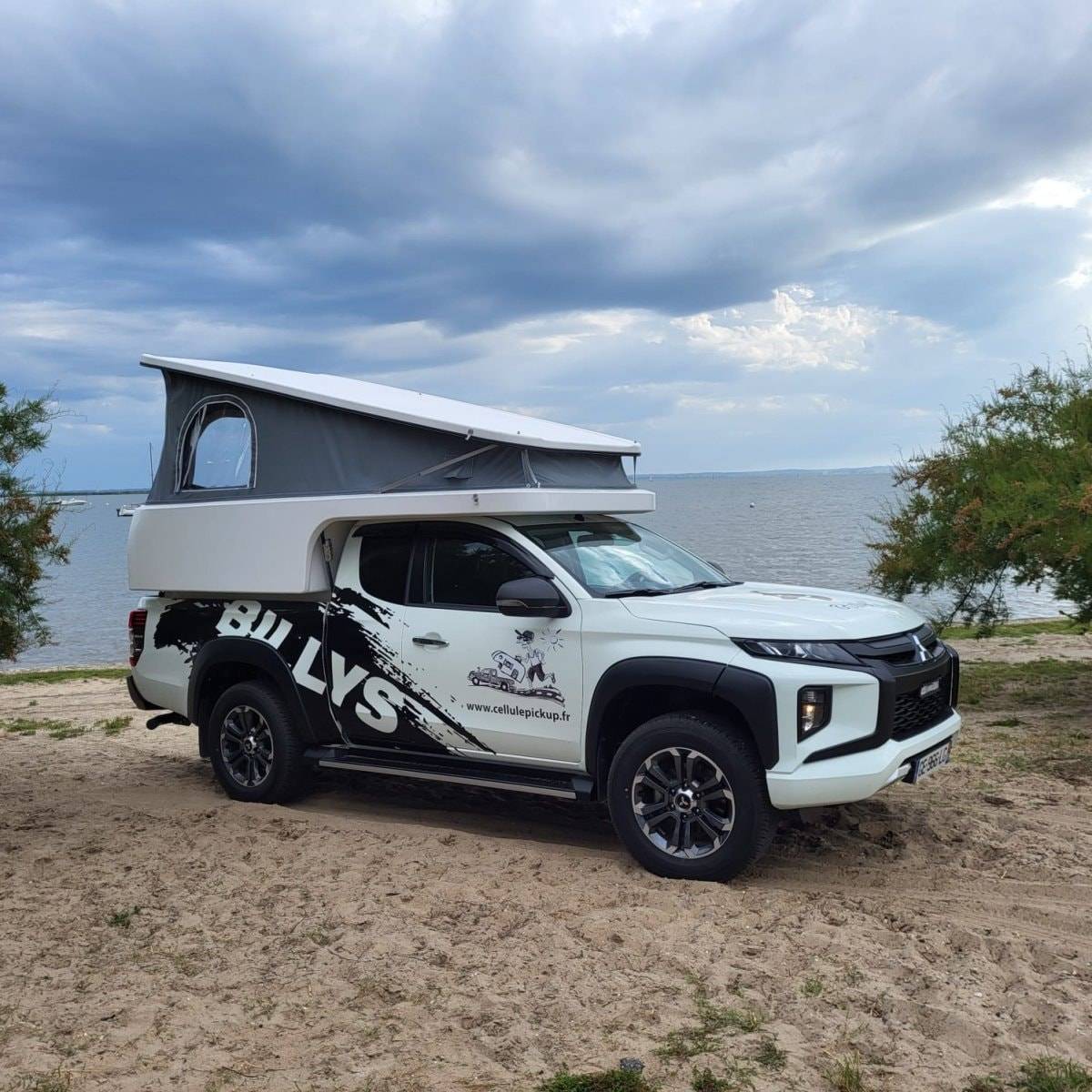
Pop-top or hard-top?
This is the first decision to make, and it determines the camper’s weight, height and equipment.
A pop-top camper, like the Billys Freedom, is lighter and lower. The Freedom weighs 254 kg fully equipped and stays under 2 m on the pickup, including the over-cab section: to our knowledge, it is the only pickup camper with an over-cab bed that stays under 2 m. Underground car parks, beach height barriers, town centres: they all stay within reach. With the roof up, it offers a permanent 140 × 200 cm bed and large windows.
A hard-top (fixed-roof) camper, like the Billys Confort 240 and 210, carries more standard equipment: shower and toilet, Truma heating and hot water, 100 L of fresh water. The Confort models weigh 560 kg fully equipped and stand 280 to 290 cm high on the pickup.
Either way, our customers tell us the same thing: the interior feels spacious and bright, thanks to the large windows.
Weight and payload
A camper sits in the load bed, so its weight adds to that of the passengers, the water and the luggage. The total must stay within your pickup’s payload: the maximum permitted weight minus the unladen weight, both shown in the vehicle’s registration documents.
The lighter the camper, the more margin you have left: 254 kg for the Freedom and 560 kg for the Confort models, fully equipped and without water.
Weight distribution matters as much as the weight itself: on a Billys, most of the storage, the kitchen and the fridge sit forward of the rear axle, to keep the pickup well balanced.
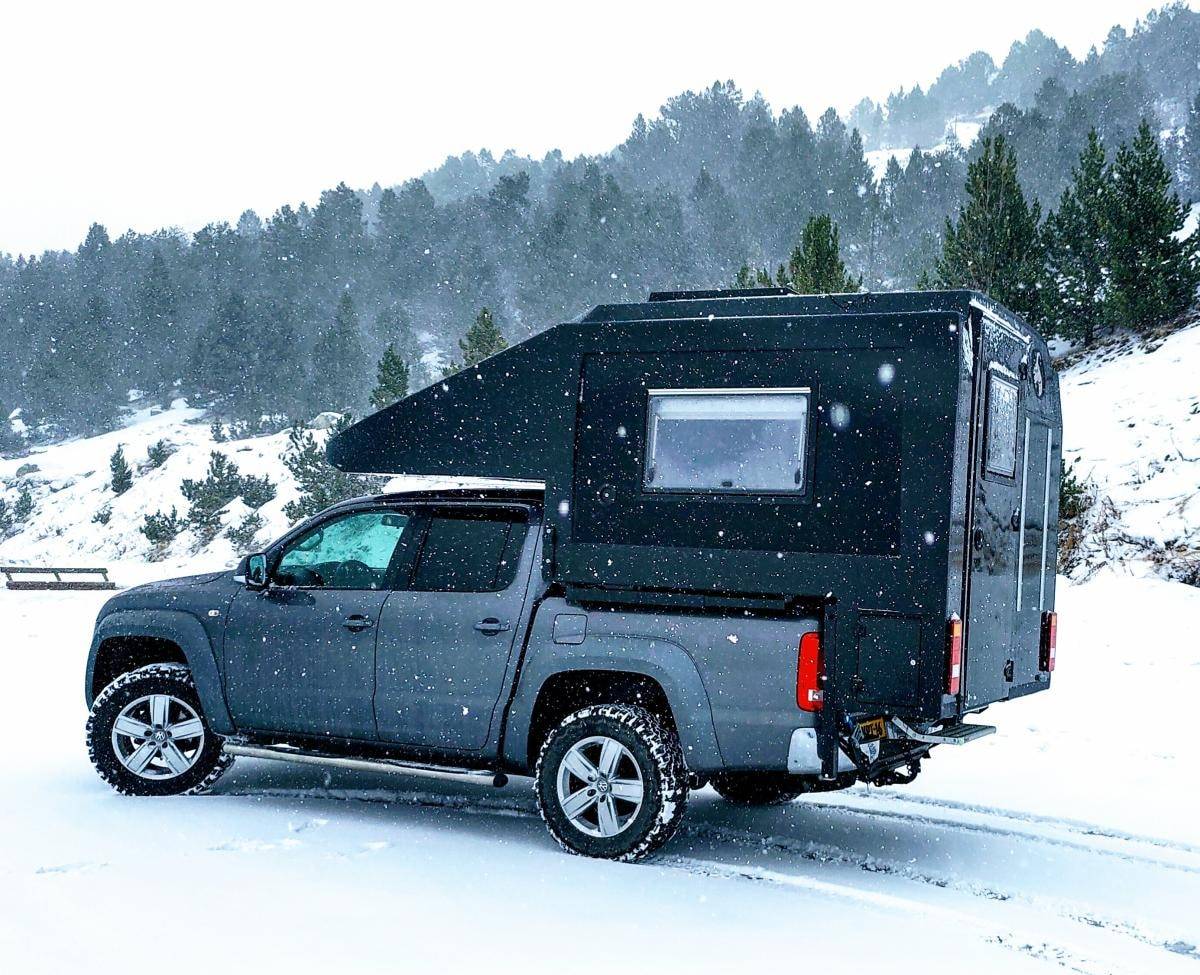
Your pickup’s cab type
The cab determines the length of the load bed, and the load bed determines the camper.
Extended cab (King Cab, Club Cab, 1.5 cab): the Billys Confort 240, with its 2.40 m floor.
Double cab (4 doors): the Billys Confort 210, with its 2.10 m floor.
Any pickup: the Billys Freedom.
Our campers fit every pickup sold in Europe – Toyota, Ford, Nissan, Renault, Maxus, Mitsubishi, Isuzu, Volkswagen… – as well as American pickups, with no modification to the vehicle.
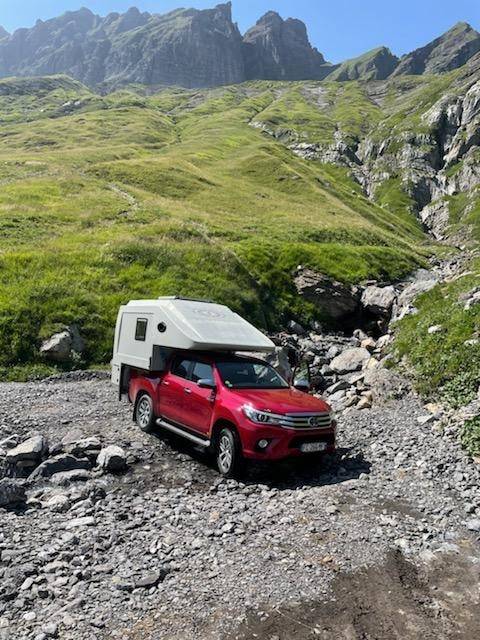
Tarmac, dirt tracks or off-road?
With a 4x4 pickup, a demountable camper takes you where a conventional motorhome can’t go: dirt tracks, trails, remote wild camping spots.
To preserve your pickup’s handling, on the road and off it, look at the weight and how it is distributed, but also at the shape: a well-streamlined camper catches less wind and is more stable on the motorway.
Billys campers are secured with four straps rated at 2 tonnes each, two of which attach directly to the chassis.
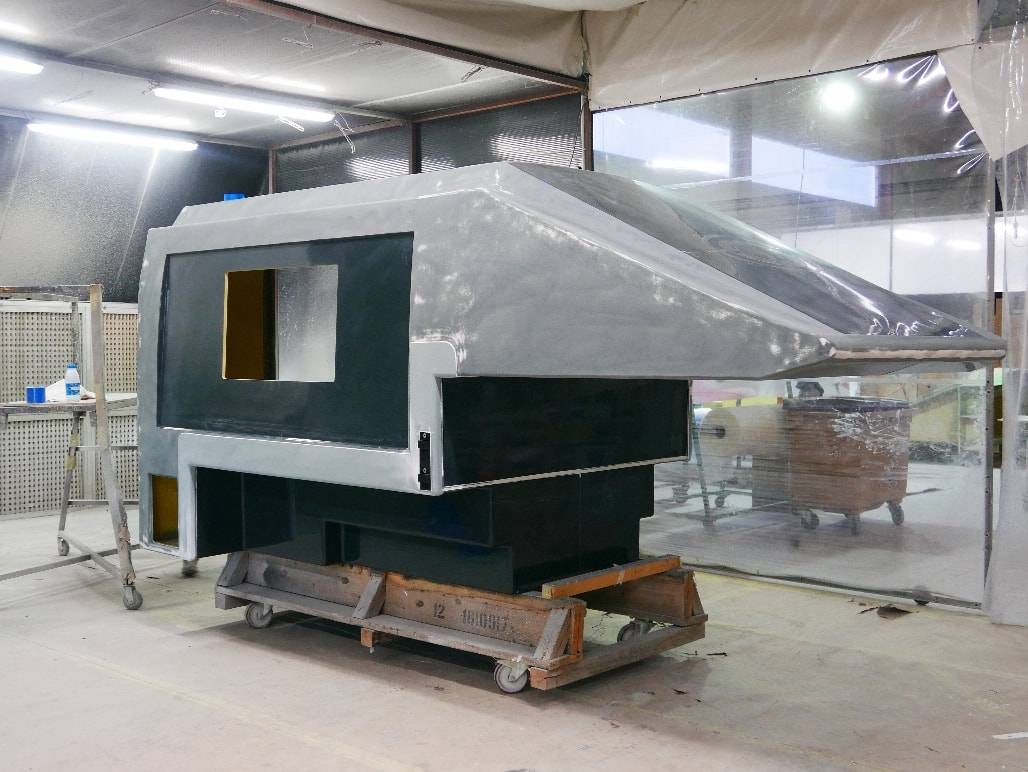
The structure: fibreglass or wood?
This is what makes a camper last. Seams and wooden reinforcements are its weak points: that is where leaks and mould get in.
Billys campers are fibreglass (GRP) monocoque shells, vacuum-moulded in a single piece in our workshop: light, very rigid, with no seams and no wood in the structure. Nothing leaks and nothing rots, which is why they last.
On Billys Confort campers, the structure is guaranteed watertight for life.
How much should you budget?
With standard equipment, the Billys Freedom costs €22,000, the Confort 210 €33,000 and the Confort 240 €33,000, all incl. VAT. The options (RAL colour, awning, bike rack, lithium battery…) are listed on each model’s page.
A Billys Confort can also be sold empty: you then choose only the pieces of furniture you want from our layout. There is only one layout: we do not build bespoke interiors.
New or used?
A used camper lets you set off sooner, on a tighter budget. Billys Composite has been selling used demountable campers for more than 15 years, including Billys campers.
Before you buy, compare its actual weight with your pickup’s payload, check the shell for cracks or signs of damp, and make sure all the equipment works properly.
After you buy: a manufacturer you can talk to
A camper stays with you for years, so it’s worth knowing who built it.
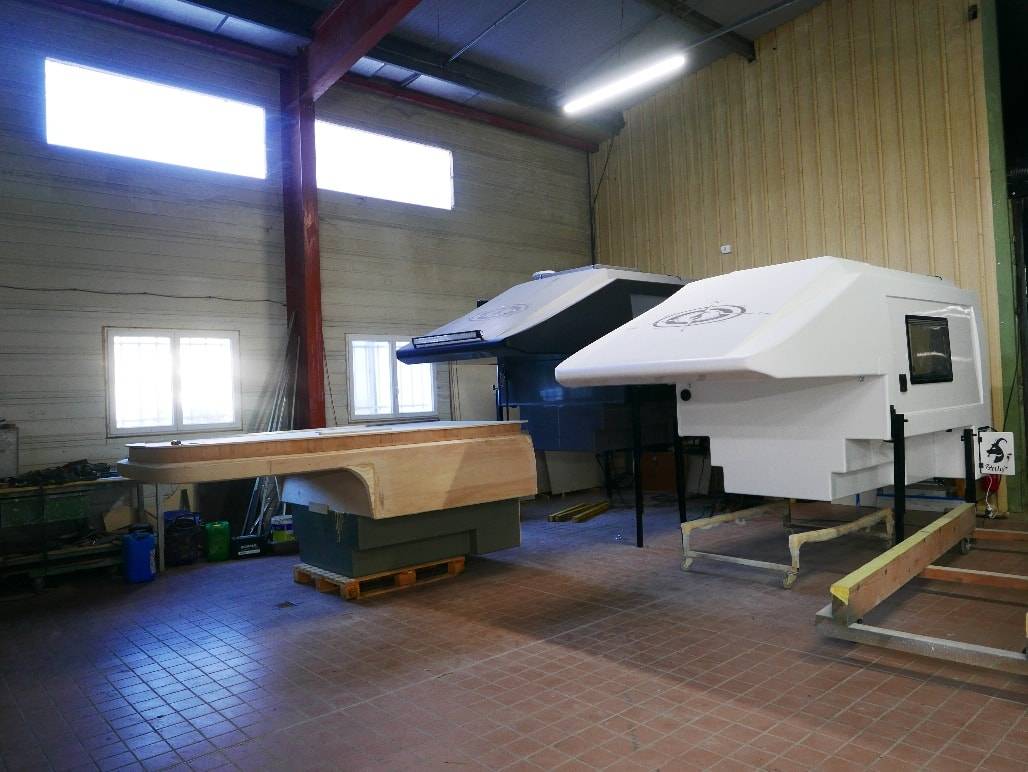
Billys campers are designed and built in France, in our workshop in Villeneuve-d’Olmes, in Ariège. If you have a question or need a repair, you speak directly to the people who built your camper, which keeps after-sales service simple.
You can come and see our campers at the workshop, by appointment, or at shows.
Know which camper you need?
Tell us which pickup you drive and how you travel: we’ll get back to you with the right model and a quote.